Translate

Saturday, June 20, 2020

George Washington statue in Portland toppled, protests continue

      Protesters tore down the statue of George Washington at the German American Society in Northeast Portland late Thursday night. (KATU)


A group of people late Thursday night tore down a statue of George Washington that stood on the lawn of the German American Society in Northeast Portland.

There were 30 to 40 people there at the time.

Meanwhile, protesters elsewhere took a break from their nightly marching, but they still gathered at Jefferson High School.

The group is organized by Rose City Justice, which usually meets at Revolution Hall and marches somewhere across the city.

But on Thursday night they stayed at Jefferson and heard from numerous speakers about the Black Lives Matter movement.

And as they have done almost every night for three weeks, another group of a few hundred protesters gathered at the Justice Center downtown, which has been the site of the most clashes between police and protesters.


My comment:

If this does not sound the alarm bells that something is terribly wrong with these protests, what will? When they bring down the statues of John Adams and Thomas Jefferson? Will Sally Hemings be the justification?

The whole situation reminds me of what Lenin said  to Bertrand Russell in 1920:  ‘Oh dear me no, we are not establishing peasant proprietorship, you see there are workers and some rich peasants and we stirred up the poor peasants against the rich peasants and these soon hanged them to the nearest tree . Ha, ha, ha, ha!’     

Bertrand Russell:  I did not much like that.   


Friday, June 19, 2020

John Bolton vs Donald Trump


I have been following what John Bolton has been saying, especially on Iran, for the last 25 years, through the days he was President George W. Bush's  Ambassador to the UN and President Trump's National Security Advisor.  Bolton is sharp,  superbly informed, was never inconsistent and has integrity. So I have no problem in deciding who is telling the truth.

Below is the list of articles from this blog on both Bolton and Trump:


Posts on John Bolton 

Thursday, September 12, 2019


Dry Bones: Bolton Gets Dumped


 Monday, May 6, 2019

 John Bolton's clear and unmistakable message to the Iranian regime


Wednesday, October 11, 2017

John Bolton: Mr. Trump: Withdraw From the Iran Nuclear Deal


Tuesday, November 15, 2016

Trump needs to reverse the Iran deal and assert our interests


Sunday, July 26, 2015


Thursday, March 26, 2015

John Bolton: To Stop Iran’s Bomb, Bomb Iran


Friday, September 28, 2012

Reaction to Netanyahu’s UN speech from John Bolton and General Jack Kaene


Wednesday, July 27, 2011

MAD is Dead


Posts on  Donald Trump


Monday, February 3, 2020

Trump’ Peace Plan


Friday, January 31, 2020

15 reasons to embrace the Trump Plan


Friday, August 23, 2019

Trump explains: I meant Jews are disloyal to Israel, not the US.


Saturday, April 27, 2019

Victor Davis Hanson: The Case for Trump


Tuesday, May 8, 2018

Full transcript of President Trump’s remarks on the US withdrawal from the Iran deal


Friday, October 13, 2017

President Trump announces he will not recertify the Iran deal


Tuesday, September 19, 2017

President Trump on Iran at the UN General Assembly


Monday, January 30, 2017

TRUMP’S BAN


Sunday, December 18, 2016

Trump can’t be pals with Putin and stand up to Iran


Thursday, November 17, 2016

Washington Post readers explain: WHY I VOTED FOR TRUMP


Sunday, September 4, 2016

Greek lesson


Tuesday, March 15, 2016

An answer from Rudy Giuliani about Donald Trump


Saturday, March 12, 2016

Rubio vs Trump on Muslims, Israel and Cuba           


Sunday, March 6, 2016

Tocqueville must be turning in his grave


Saturday, January 23, 2016

Against Trump


By John Bolton
June 17, 2020 2:46 pm ET

U.S. strategy toward the People’s Republic of China has rested for more than four decades on two basic propositions. The first is that the Chinese economy would be changed irreversibly by the rising prosperity caused by market-oriented policies, greater foreign investment, ever-deeper interconnections with global markets and broader acceptance of international economic norms. Bringing China into the World Trade Organization in 2001 was the apotheosis of this assessment.

The second proposition is that, as China’s national wealth increased, so too, inevitably, would its political openness. As China became more democratic, it would avoid competition for regional or global hegemony, and the risk of international conflict—hot or cold—would recede.

Both propositions were fundamentally incorrect. After joining the WTO, China did exactly the opposite of what was predicted. China gamed the organization, pursuing a mercantilist policy in a supposedly free-trade body. China stole intellectual property, forced technology transfers from foreign businesses and continued managing its economy in authoritarian ways.

Politically, China moved away from democracy, not toward it. In Xi Jinping, China now has its most powerful leader and its most centralized government since Mao Zedong. Ethnic and religious persecution on a massive scale continues. Meanwhile, China has created a formidable offensive cyberwarfare program, built a blue-water navy for the first time in 500 years, increased its arsenal of nuclear weapons and ballistic missiles, and more.

I saw these developments as a threat to U.S. strategic interests and to our friends and allies. The Obama administration basically sat back and watched it happen.

President Donald Trump in some respects embodies the growing U.S. concern about China. He appreciates the key truth that politico-military power rests on a strong economy. Trump frequently says that stopping China’s unfair economic growth at America’s expense is the best way to defeat China militarily, which is fundamentally correct.


But the real question is what Trump does about China’s threat. His advisers are badly fractured intellectually. The administration has “panda huggers” like Treasury Secretary Steven Mnuchin; confirmed free-traders like National Economic Council Director Larry Kudlow; and China hawks like Commerce Secretary Wilbur Ross, lead trade negotiator Robert Lighthizer and White House trade adviser Peter Navarro.

After I became Trump’s national security adviser in April 2018, I had the most futile role of all: I wanted to fit China trade policy into a broader strategic framework. We had a good slogan, calling for a “free and open Indo-Pacific” region. But a bumper sticker is not a strategy, and we struggled to avoid being sucked into the black hole of U.S.-China trade issues.

Trade matters were handled from day one in a completely chaotic way. Trump’s favorite way to proceed was to get small armies of people together, either in the Oval Office or the Roosevelt Room, to argue out these complex, controversial issues. Over and over again, the same issues. Without resolution, or even worse, one outcome one day and a contrary outcome a few days later. The whole thing made my head hurt.

With the November 2018 midterm elections looming, there was little progress on the China trade front. Attention turned to the coming Buenos Aires G-20 summit the following month, when Xi and Trump could meet personally. Trump saw this as the meeting of his dreams, with the two big guys getting together, leaving the Europeans aside, cutting the big deal.

What could go wrong? Plenty, in Lighthizer’s view. He was very worried about how much Trump would give away once untethered.

In Buenos Aires on Dec. 1, at dinner, Xi began by telling Trump how wonderful he was, laying it on thick. Xi read steadily through note cards, doubtless all of it hashed out arduously in advance. Trump ad-libbed, with no one on the U.S. side knowing what he would say from one minute to the next.

One highlight came when Xi said he wanted to work with Trump for six more years, and Trump replied that people were saying that the two-term constitutional limit on presidents should be repealed for him. Xi said the U.S. had too many elections, because he didn’t want to switch away from Trump, who nodded approvingly.

Xi finally shifted to substance, describing China’s positions: The U.S. would roll back Trump’s existing tariffs, and both parties would refrain from competitive currency manipulation and agree not to engage in cyber thievery (how thoughtful). The U.S. should eliminate Trump’s tariffs, Xi said, or at least agree to forgo new ones. “People expect this,” said Xi, and I feared at that moment that Trump would simply say yes to everything Xi had laid out.

Trump came close, unilaterally offering that U.S. tariffs would remain at 10% rather than rise to 25%, as he had previously threatened. In exchange, Trump asked merely for some increases in Chinese farm-product purchases, to help with the crucial farm-state vote. If that could be agreed, all the U.S. tariffs would be reduced. It was breathtaking.

Trump asked Lighthizer if he had left anything out, and Lighthizer did what he could to get the conversation back onto the plane of reality, focusing on the structural issues and ripping apart the Chinese proposal. Trump closed by saying Lighthizer would be in charge of the deal-making, and Jared Kushner would also be involved, at which point all the Chinese perked up and smiled.

The decisive play came in May 2019, when the Chinese reneged on several key elements of the emerging agreement, including all the structural issues. For me, this was proof that China simply wasn’t serious.

Trump spoke with Xi by phone on June 18, just over a week ahead of the year’s G-20 summit in Osaka, Japan, where they would next meet. Trump began by telling Xi he missed him and then said that the most popular thing he had ever been involved with was making a trade deal with China, which would be a big plus for him politically.

In their meeting in Osaka on June 29, Xi told Trump that the U.S.-China relationship was the most important in the world. He said that some (unnamed) American political figures were making erroneous judgments by calling for a new cold war with China.


Whether Xi meant to finger the Democrats or some of us sitting on the U.S. side of the table, I don’t know, but Trump immediately assumed that Xi meant the Democrats. Trump said approvingly that there was great hostility to China among the Democrats. Trump then, stunningly, turned the conversation to the coming U.S. presidential election, alluding to China’s economic capability and pleading with Xi to ensure he’d win. He stressed the importance of farmers and increased Chinese purchases of soybeans and wheat in the electoral outcome. I would print Trump’s exact words, but the government’s prepublication review process has decided otherwise.

Trump then raised the trade negotiations’ collapse the previous month, urging China to return to the positions it had retracted and conclude the most exciting, largest deal ever. He proposed that for the remaining $350 billion of trade imbalances (by Trump’s arithmetic), the U.S. would not impose tariffs, but he again returned to importuning Xi to buy as many American farm products as China could.

Xi agreed that we should restart the trade talks, welcoming Trump’s concession that there would be no new tariffs and agreeing that the two negotiating teams should resume discussions on farm products on a priority basis. “You’re the greatest Chinese leader in 300 years!” exulted Trump, amending that a few minutes later to “the greatest leader in Chinese history.”


Subsequent negotiations after I resigned did lead to an interim “deal” announced in December 2019, but there was less to it than met the eye.

Trump’s conversations with Xi reflected not only the incoherence in his trade policy but also the confluence in Trump’s mind of his own political interests and U.S. national interests. Trump commingled the personal and the national not just on trade questions but across the whole field of national security. I am hard-pressed to identify any significant Trump decision during my White House tenure that wasn’t driven by re-election calculations.

Take Trump’s handling of the threats posed by the Chinese telecommunications firms Huawei and ZTE. Ross and others repeatedly pushed to strictly enforce U.S. regulations and criminal laws against fraudulent conduct, including both firms’ flouting of U.S. sanctions against Iran and other rogue states. The most important goal for Chinese “companies” like Huawei and ZTE is to infiltrate telecommunications and information-technology systems, notably 5G, and subject them to Chinese control (though both companies, of course, dispute the U.S. characterization of their activities).

Trump, by contrast, saw this not as a policy issue to be resolved but as an opportunity to make personal gestures to Xi. In 2018, for example, he reversed penalties that Ross and the Commerce Department had imposed on ZTE. In 2019, he offered to reverse criminal prosecution against Huawei if it would help in the trade deal—which, of course, was primarily about getting Trump re-elected in 2020.

These and innumerable other similar conversations with Trump formed a pattern of fundamentally unacceptable behavior that eroded the very legitimacy of the presidency. Had Democratic impeachment advocates not been so obsessed with their Ukraine blitzkrieg in 2019, had they taken the time to inquire more systematically about Trump’s behavior across his entire foreign policy, the impeachment outcome might well have been different.


As the trade talks went on, Hong Kong’s dissatisfaction over China’s bullying had been growing. An extradition bill provided the spark, and by early June 2019, massive protests were under way in Hong Kong.

I first heard Trump react on June 12, upon hearing that some 1.5 million people had been at Sunday’s demonstrations. “That’s a big deal,” he said. But he immediately added, “I don’t want to get involved,” and, “We have human-rights problems too.”


I hoped Trump would see these Hong Kong developments as giving him leverage over China. I should have known better. That same month, on the 30th anniversary of China’s massacre of pro-democracy demonstrators in Tiananmen Square, Trump refused to issue a White House statement. “That was 15 years ago,” he said, inaccurately. “Who cares about it? I’m trying to make a deal. I don’t want anything.” And that was that.

Beijing’s repression of its Uighur citizens also proceeded apace. Trump asked me at the 2018 White House Christmas dinner why we were considering sanctioning China over its treatment of the Uighurs, a largely Muslim people who live primarily in China’s northwest Xinjiang Province.

At the opening dinner of the Osaka G-20 meeting in June 2019, with only interpreters present, Xi had explained to Trump why he was basically building concentration camps in Xinjiang. According to our interpreter, Trump said that Xi should go ahead with building the camps, which Trump thought was exactly the right thing to do. The National Security Council’s top Asia staffer, Matthew Pottinger, told me that Trump said something very similar during his November 2017 trip to China.


Trump was particularly dyspeptic about Taiwan, having listened to Wall Street financiers who had gotten rich off mainland China investments. One of Trump’s favorite comparisons was to point to the tip of one of his Sharpies and say, “This is Taiwan,” then point to the historic Resolute desk in the Oval Office and say, “This is China.” So much for American commitments and obligations to another democratic ally.

More thunder out of China came in 2020 with the coronavirus pandemic. China withheld, fabricated and distorted information about the disease; suppressed dissent from physicians and others; hindered efforts by the World Health Organization and others to get accurate information; and engaged in active disinformation campaigns, trying to argue that the new coronavirus did not originate in China.


There was plenty to criticize in Trump’s response, starting with the administration’s early, relentless assertion that the disease was “contained” and would have little or no economic effect. Trump’s reflex to try to talk his way out of anything, even a public-health crisis, only undercut his and the nation’s credibility, with his statements looking more like political damage control than responsible public-health advice.

Other criticisms of the administration, however, were frivolous. One such complaint targeted part of the general streamlining of NSC staffing I conducted in my first months at the White House. To reduce duplication and overlap and enhance coordination and efficiency, it made good management sense to shift the responsibilities of the NSC directorate dealing with global health and biodefense into the directorate dealing with biological, chemical and nuclear weapons. Bioweapon attacks and pandemics can have much in common, and the medical and public-health expertise required to deal with both threats goes hand in hand. Most of the personnel working in the prior global health directorate simply moved to the combined directorate and continued doing exactly what they were doing before.

At most, the internal NSC structure was the quiver of a butterfly’s wings in the tsunami of Trump’s chaos. Despite the indifference at the top of the White House, the cognizant NSC staffers did their duty in the pandemic, raising options like shutdowns and social distancing far before Trump did so in March. The NSC biosecurity team functioned exactly as it was supposed to. It was the chair behind the Resolute desk that was empty.

In today’s pre-2020 election climate, Trump has made a sharp turn to anti-China rhetoric. Frustrated in his search for the big China trade deal, and mortally afraid of the negative political effects of the coronavirus pandemic on his re-election prospects, Trump has now decided to blame China, with ample justification. Whether his actions will match his words remains to be seen. His administration has signaled that Beijing’s suppression of dissent in Hong Kong will have consequences, but no actual consequences have yet been imposed.

Most important of all, will Trump’s current China pose last beyond election day? The Trump presidency is not grounded in philosophy, grand strategy or policy. It is grounded in Trump. That is something to think about for those, especially China realists, who believe they know what he will do in a second term.

—Mr. Bolton, a former U.S. ambassador to the U.N., served as national security adviser from April 2018 to September 2019. This essay is adapted from his forthcoming book, “The Room Where It Happened: A White House Memoir,” which Simon & Schuster will publish on June 23.

Wednesday, June 17, 2020

Sign the petition: Do not free Daniel Pearl's murderers


Pakistan must not free the murderers of Daniel Pearl!
Can anyone forget this journalist kidnapped in Pakistan on January 23, 2002?
Daniel Pearl, in charge of the Wall Street Journal office for Southern Asia, had come to the area to investigate ties between the so-called “Shoe Bomber”, British terrorist Richard Reid and the terrorist organization Al-Qaeda.
A terrorist group connected to Al-Qaeda as well as to ISI, Pakistan’s military secret services, claimed responsibility for taking Daniel Pearl hostage and making demands on the United States.
Daniel was murdered soon after.
His martyrdom is a symbol.
He was assassinated as a free man, as a journalist seeking to establish the truth, as an American, as a Jew. 
He was the first hostage whose beheading was staged and filmed by Islamist terrorists.
Many more were to follow.
In July 2002, three accomplices were sentenced to life imprisonment while the mastermind of the crime, Ahmed Omar Saïd Cheikh, was condemned to death. He has been in prison since that time.
A few wekkes ago, the High Court of Pakistan’s Sindh province commuted Omar's sentence to 7 years imprisonment and consequently ordered him and his accomplices to be set free!
Daniel Pearl's parents  have filed a petition and appealed to the Supreme Court.
We do hope that justice will prevail !
Our commitment has always been to defend freedom of thought and freedom of expression for the citizens of Pakistan.  We supported  Christian prisoner  Asia Bibi throughout her ordeal. We defend terror victims, democrats,  victims of the Blasphemy Law, ethnic and religious minorities submitted to repression.
Impunity granted to Daniel Pearl's murderers would be a terrible signal : murderers would roam freely whereas innocent people who neither killed nor harmed anyone would stay in prison and risk death.
This just cannot be !

Saturday, June 13, 2020

Douglas Murray: In defence of liberalism: resisting a new era of intolerance


Douglas Murray


It has become fashionable in recent years to talk of the death of liberalism. But as crowds high on the octane of generational self-righteousness rampage through major cities, the evidence mounts. The growing intolerance of freedom of thought, the inability to talk across divides, the way that most of the British establishment, police included, feels the need to pledge fealty to the cause — as though all terrified of ending up on the wrong side — points to a crisis of more than confidence. It is evidence of an underlying morbidity.

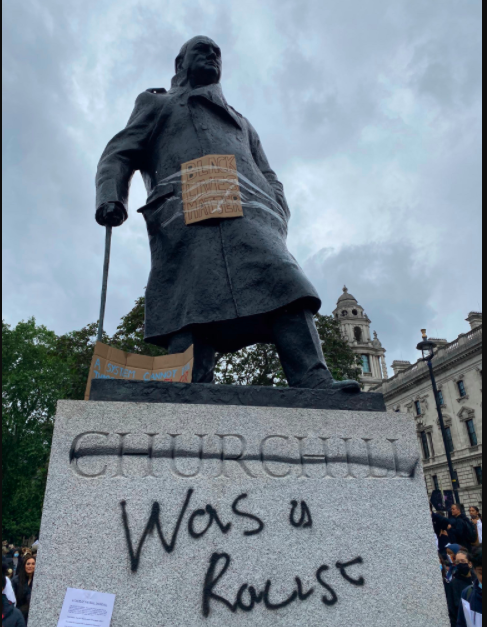
Each day the cultural revolution is picking up a pace, with the iconoclasts who attacked the Cenotaph and the statue of Winston Churchill looking for new focuses for their rage. The University of Liverpool has announced that its Gladstone halls of residence will be renamed after protestors pointed out that the former prime minister’s father had owned slaves. So there goes the ‘sins of the father’ ethic too. Nervous broadcasters have started removing programmes ahead of any stampede, with the BBC withdrawing Little Britain and HBO taking out Gone with the Wind from their streaming services in case the woke eye of Sauron flashes on them.

What we are seeing is nothing more or less than the death of the liberal ideal.

Of course ‘liberalism’ was always a broadly defined term; a definition made only vaguer by Americans making it synonymous with ‘left-wing’. But in the truest political sense it encapsulates most of the foundations of our political order, including (though not limited to) equality, the rule of law and freedom — including the freedom of speech that allows good ideas to win out. In the past few years, left-wing critics have been keen to identify what they see as the erasure of liberal democracy by popularly elected leaders on the political right. But in our own country, the much more serious assault on political liberalism comes not from the conservative right, but from the radical left.

Over the past couple of weeks, well-meaning people have poured almost a million pounds into the coffers of Black Lives Matter UK in the belief that they are helping a movement that will help black people. In fact they have funded a deeply radical movement. On its own fundraising page, BLM UK describes its aims as: ‘to dismantle imperialism, capitalism, white supremacy, patriarchy and the state structures.’ So as well as dismantling a nonexistent menace (‘imperialism’) it intends to bring down the economy and completely alter relations between the sexes (negatively characterised as ‘patriarchy’). This is not liberalism, but far-left radicalism of a kind that has become very familiar of late.

Some people watching events of recent days will have been surprised by how far and fast such sentiments have run. By the sight of a mob in Bristol tearing down a statue and then jumping on it. By a Labour MP saying: ‘I celebrate these acts of resistance. We need a movement that will tear down systemic racism.’ By the ranks of British police who could find no way to respond to this behaviour other than (in a newly invented act of faith) to ‘take the knee’ before it. And then there is the media, which has chosen to provide cover for such violence and purge from their ranks not just people who dissent from it but, in the case of the New York Times a few days ago, anyone who helps publish someone who dissents.

As one of the last liberals left at that newspaper, Bari Weiss, explained it last week, the over-forties in the news business (like so many others) imagined that the people coming up under them shared their liberal worldview. Then they discovered that these young people believed in ‘safetyism’ over liberalism, and ‘the right of people to feel emotionally and psychologically safe’ over ‘what were considered core liberal values, like free speech’. Actually the divide is even bigger than that, and now encompasses nearly everything. Where the liberal mind is inquiring, the woke mind is dogmatic. Where the liberal mind is capable of humility, the woke mind is capable of none. Where the liberal mind is able to forgive, the woke mind believes that to have erred just once is cause enough to be ‘cancelled’. And while the liberal mind inherited the idea of loving your neighbour, the woke mind positively itches to cast the first stone.

Readers of The Spectator have known this was coming. When this magazine first wrote about the Stepford Students, it was asked why we take this so seriously — surely the students would grow up? And they did: but they didn’t change. The virtue-signalling of large corporations — the growing legions of diversity officers and ‘implicit bias training’ — was also written off as the silliness of the corporate world. When we described the mandatory requirement in government to prove a ‘commitment to diversity’ in order to be eligible for any public appointment, it was greeted with the same dismissal. As the American journalist Andrew Sullivan (himself now seemingly muzzled, if not cancelled) put it two years ago: ‘We all live on campus now.’

Step by step, the UK came to have a public and private sector dedicated to the implementation of views which are barely distinguishable from those of the protestors who took to the streets in the past week or two. It’s an ethic which demands that our society play a set of impossible, unwinnable games of identity and ‘privilege’ that not only subvert but end any idea of tolerance.


All of this emanates from those who come out of university educated to loathe our society, believing it to be characterised by the oppression of certain groups by other groups: a shameful history and a shameful present. Today these people head into professions where their language of aggressive superiority (‘Educate yourself’) is used to intimidate their elders, force every-one to agree with their point of view and otherwise make themselves unsackable.

As with all movements that catch, they aren’t on to nothing. Inequalities and inequities do exist, here as in all societies. Reasonable people disagree about how to address this. But the new illiberal radicals do not share that worry. For them, every inequity that exists (financial, familial, social, neurological) is the result of the same thing: discrimination. A thing we must ‘tackle’, ‘eradicate’ and otherwise cleanse from existence. There’s an awful lot of work to do.

Even the woke analysis of history that now sees them scouring the land for more statues to assault is radically different from that of the liberal mind. Liberals understand that people in history acted with the knowledge they had at the time, and that the task of those looking back is to look on it with understanding, not least in the hope of being understood in turn. The woke mind abhors this. It knows that it is right, and that everybody before this year zero was a bigot. After the weekend’s vandalism against London monuments, the capital’s Mayor, Sadiq Khan, announced that his ‘Commission for Diversity in the Public Realm’ would sit in judgment on all racist statues in the capital. Within hours, the Museum of London had already brought in the cranes to remove an errant statue on West India Quay.

In such ways has the free exchange of ideas about our past and present been replaced by a series of demands and assertions that demand everyone else’s compliance. ‘Silence is violence’ is one favoured line, meaning that if you do not agree with the radicals, you are perpetrating an act of violence. Naturally this assertion comes from the same people who have spent a lot of time asserting that words (such as ‘mis-gendering’ someone) are violence. While the violence of the past few days is not violence.

It is on the lip of this trap that our representatives and public figures have teetered over the past week or two, unable to work out how they can avoid a step they intuit to be deadly. What they need to do is pause and fundamentally change the terms, basing their appeal not just on reason but on a truly liberal spirit. It should be one which emphasises that the claims being made are unjust. It is unjust to portray the whole of American society, in all of its complexity, as typified by a policeman who is awaiting trial for murder. And it is even more unjust to think that his actions reveal some deep truth about the British police, or the British state, let alone everybody who is white. Equally, it is not just unjust but vindictive to pretend that any contradiction of your world view is merely a display of ‘white privilege’, ‘white fragility’ or ‘white tears’.

Unwittingly or otherwise, those who use these terms subvert one of the last great additions to liberal thought: that aspiration expressed by Dr Martin Luther King half a century ago. For when Dr King talked about the need to judge a person by the content of their character and not by the colour of their skin, he gave us something that was not just a great moral insight but — in an increasingly diverse society — the only solution. A year before his death, Dr King gave a speech titled ‘Where do we go from here?’ in which he said: ‘Let us be dissatisfied until that day when nobody will shout, “White Power!”, when nobody will shout, “Black Power!”, but everybody will talk about God’s power and human power.’

The people who have come after Dr King have spent years busily inverting that dream. In the name of black agency they try to deny white people agency. In the name of assailing white supremacy they end up by asserting black supremacy. And in order to make up for the sufferings of people who are no longer alive they demand vast wealth transfers today based on racial grouping. It is hard to imagine a more divisive programme, all carried out in the name of anti-racism. What they are actually doing is busily re-racialising our societies. Which is how you come to the situation where a cabinet minister is quizzed on Sky News about the precise ethno-racial composition of the British cabinet and certain ‘anti-racists’ can be found on social media noting with disapproval the number of people of Asian descent in the cabinet.

Any movement that says ‘Things are so bad that this whole thing needs to be pulled down’ should be encouraged to realise, before they have to experience it, the cost of what they are abandoning. And to remember the central truth about how much easier it is to pull down than it is to build. They must be responded to by people of every skin colour and background with a polite but firm ‘No’. Not just because the things that they are attempting to pull down include the only things that are capable of holding us all up. But because if everything that got us here was so bad, then what we are living in wouldn’t be so unusually good.

Black Lives Matter vs Winston Churchill - whose side are you on?


I just wrote a letter to the Jerusalem Post regarding:   Open letter calls on Jewish organizations to endorse Black Lives Matter.

An open letter organized by three Jewish activists is calling on the Jewish community to take a number of actions, including endorsing Black Lives Matter. (June 13).  Published Friday, the letter has been signed by 52 people affiliated with Jewish organizations.

Yet a Black Lives Matter protester vandalized the statue of Winston Churchill in Parliament Square. He explained his motives:  “I tagged up the statue of Churchill because he's a confirmed racist. He fought the Nazis to protect the Commonwealth from invasion - he didn't do it for black people or for people of colour or for people of anything. He did it sheerly for colonialism. People will be angry - but I'm angry that for many years we have been oppressed”

In his December 31, 1999 column in the Washington Post, Charles Krauthammer wrote:

“Person of the Century? Time magazine offered Albert Einstein, an interesting and solid choice. Unfortunately, it is wrong. The only possible answer is Winston Churchill.

Why? Because only Churchill carries that absolutely required criterion: indispensability. Without Churchill the world today would be unrecognizable — dark, impoverished, tortured.

Take away Churchill in 1940, on the other hand, and Britain would have settled with Hitler — or worse. Nazism would have prevailed. Hitler would have achieved what no other tyrant, not even Napoleon, had ever achieved: mastery of Europe. Civilization would have descended into a darkness the likes of which it had never known.”

Jewish organizations are willing to endorse Black Lives Matter whose members desecrate the statue of the man who saved civilization from the “darkness the likes of which it had never known”.  This is shameful!  They have forgotten our collective history.

Mladen Andrijasevic

Be’er Sheva


Update, June 15, 2020:  Published as a Letter to the Editor in the Jerusalem Post

Sunday, June 7, 2020

Douglas Murray on the George Floyd protests, rioting & COVID hypocrisy


34:00 min into the Douglas Murray video:

You just can’t improve on what George Orwell said when he met a fanatic of a similar ilk.
One of my favorite stories of him was him debating with a Stalinist in the 1940s after the Ukraine famine, after the Show Trials, after 1937, after 1938, this is when you already knew everything you needed to know about comrade Stalin and Orwell is debating with this Stalinist and he concedes this, well yes, the trials and he goes on and on just refusing really to deal with every single one  of the issues  that have already come up and eventually says that great immortal getout for cowards across the centuries  -      “ you can’t make an omelet  without breaking eggs”  and George Orwell says to the Stalinist:  “Where’s the omelet?”

Winston Churchill statue vandalised as thousands attend Black Lives Matter rally


To me this shows better than anything else what these demonstrators stand for.