Translate

Friday, December 23, 2016

Slamming Obama admin, PM office says Israel 'will not abide' by 'shameful' UN resolution

i24


As the UN Security Council on Friday passed a resolution condemning Israeli settlements in the West Bank, responses in the Jewish state ranged from outrage at US President Barack Obama over the abstention from vetoing the measure, to blaming Prime Minister Benjamin Netanyahu's right-wing policies for alienating the international community.

Netanyahu's office issued a statement saying "Israel rejects this shameful anti-Israel resolution at the UN and will not abide by its terms. At a time when the Security Council does nothing to stop the slaughter of half a million people in Syria, it disgracefully gangs up on the one true democracy in the Middle East, Israel, and calls the Western Wall 'occupied territory.'"

The strongly worded statement charged that "The Obama administration not only failed to protect Israel against this gang-up at the UN, it colluded with it behind the scenes. Israel looks forward to working with President-elect Trump and with all our friends in Congress, Republicans and Democrats alike, to negate the harmful effects of this absurd resolution."

Israel's Minister of National Infrastructure, Energy and Water Resources Yuval Steinitz charged that Washington had effectively "abandoned Israel, its only ally in the Middle East," further adding that such "behavior" was not befitting of a "friend."

Whereas Tzipi Livni, a former foreign minister, conceding the resolution was "bad" for Israel, laid the blame at Netanyahu's door for "surrendering" to the far right: "Netyanyahu passed the [pro-settlement] regulation bill and we all will pay the price," she wrote on Twitter. 

Opposition Leader Isaac Herzog spoke of "a difficult evening for Israel," saying that whatever illusions Israelis had over "the applause" Netanyahu's speeches received abroad were "shattered" by a decision that leaves Israel "an an outcast among the nations." 

Fellow Zionist Union lawmakers Eitan Cabel, Erel Margalit and Yoel Hasson accused Netanyahu of self-centered arrogance and "political sloppiness," which "cost Israel dear."

Ayman Odeh, the leader of the predominantly Arab United List faction, charged that Netanyahu's policies, including the regulation bill, showed the world he's the "peace refusenik," echoing the language of Netanyahu and right-wing Defense Minister Avigdor Lieberman on Palestinian leader Mahmoud Abbas. 

Palestinian officials including veteran statesman and negotiator Saeb Erekat spoke of a "victory." 

Ryan slams 'shameful' abstention

In the US, prominent conservative supporters of Israel condemned the resolution.

The US GOP House Majority leader slammed the US abstention as "absolutely shameful," saying the resolution was aimed to "isolate and demonize" Israel.

Republican Senator John McCain said the abstention makes the US "complicit in this outrageous attack" against Israel.

President-elect Trump responded to the vote saying, "Things will be different after Jan. 20th."


****

Jewish settlements? What about Islamic occupation?


Well, the Obama presidency will end in 27 days 18 hours and 19 minutes but  the mess Obama’s absurd policies have created will endanger humanity for years to come!


What Obama has actually done is underline what his legacy will be:  Support of the Muslim Brotherhood, capitulation to Iran, failure to face down Assad and joining the jackals at the UN against Israel.  


Sunday, December 18, 2016

Trump can’t be pals with Putin and stand up to Iran


President-elect Donald Trump during the campaign was clear on at least two foreign policy issues: his opposition to the Joint Comprehensive Plan of Action (a.k.a. the Iran deal) and his desire to get along with Russia. We will not know how serious he was about the latter until he takes office. Likewise, we do not know how he plans to disable the JCPOA. Sooner or later, however, he will need to confront an unpleasant reality: Russia and Iran are allies, and both want to displace the United States as the primary force in the Middle East. Put differently, if we want to turn the screws on Iran, Russia will not want to “get along” with us.

Russia is a major supplier of arms to Iran and supports its efforts to prop up Syrian President Bashar al-Assad. This summer Russian warplanes took off from Iranian bases to strike targets in Syria.

Russia has publicly warned against violating the JCPOA; Trump wants to rip it up. If the JCPOA fell by the wayside, Russia in all likelihood would increase its economic and military support for Iran, attempting to heighten tension between the United States and its European allies, and portray the U.S. policy as a failure. Insofar as Trump thinks he can renegotiate the JCPOA, Russia will likely pose a problem, as J. Matthew McInnis explained:

Trump will also be aware that any major confrontation with Iran over the JCPOA must be considered in context of his policies toward Russia and vice-versa. Russian President Vladimir Putin did not, and still does not, want Tehran to get the bomb. Moscow, however, has used the nuclear deal in part to carve out a much more significant role in the Middle East, including a burgeoning new military alliance with Iran in Syria and elsewhere. These circumstances likely limit the degree of coercive diplomatic or even military power the United States could use in any renegotiation, unless Russia is on board with the White House’s game plan.

If Trump scrapped or forced Iran to scrap the JCPOA, Iran would likely restart its nuclear program. As events unfolded, we inevitably would find ourselves increasingly at odds with Russia, as Ilan Goldenberg, director of the Middle East program at the Center for a New American Security, explained:

As Iran got closer to a nuclear weapon, the likelihood would increase of an Israeli strike or a decision by the Trump administration to use military force against Iran’s nuclear program. We would essentially be back in the days of 2009 to 2012.

In that world, Iran’s most effective tools against the United States would be its surrogates and proxies across the Middle East — especially in Iraq and Syria. In recent years, Iran has pushed its proxies to focus on supporting Assad and fighting ISIL.  However, if Iran-U.S. tensions start to rise the priority would quickly shift back to using the groups it supports to exact a cost on the United States and deter American military action. …

Russian-American relations would also suffer as Moscow would view this escalation and the potential of an American-led attack on Iran as another example of American superpower overreach, which it would try to counter and contain. It is simply inconceivable that in this scenario the United States, Russia, and Iran could successfully coordinate in Syria and Iraq. And Trump’s rapprochement with Russia would likely collapse.

Trump will soon find that there are reasons why we don’t “get along” with Russia. Putin supports our enemies (e.g., Iran) and threatens our allies (e.g., NATO). His interests and ours conflict in significant ways. Trump may want, as President Obama did, to withdraw from the world, but he will soon learn that if we leave, Russia “wins” by increasing its influence. Trump’s senior advisers likely understand the contradiction — one of many — at the heart of Trump’s foreign policy thinking. Perhaps he will come to appreciate the problem as soon as he tries to back away from or force Iran to give up the JCPOA, which could come within months of his inauguration. The reality is likely to disrupt his hope (again not too different from Obama’s initial view) that we can embrace the Russian bear.

The Guardian: Barack Obama’s presidency will be defined by his failure to face down Assad


The US president’s indifference to chemical warfare led to the trail of violence that reached as far as Europe  


By Muhammad Idrees Ahmad

On Friday, near Palmyra, 14 tanks and an anti-aircraft system were destroyed in an air strike on Isis. Palmyra recently fell to the jihadists after the Syrian regime and its allies diverted forces to Aleppo, leaving the ancient city under-defended.

This was a repeat of events last year when, on the advice of the Iranian general Qassem Suleimani, the regime deployed troops away from Palmyra to the strategically significant metropolis of Aleppo. The planes struck Palmyra on the same day Suleimani was photographed treading the city’s rubble. But the planes weren’t Russian or Syrian: they belonged to the US-led international coalition. While the US has its own reasons for battling Isis, in this case it was picking up the slack from the regime.

Palmyra has only symbolic significance for Assad. Aleppo was the prize, and, with the world watching impotent, the regime was able to starve and bludgeon its population into surrender. The regime was aided by Russian bombers and special forces, Iranian Revolutionary Guards, Hezbollah mercenaries, and a horde of sectarian militias from Iraq, Afghanistan and Pakistan – but, above all, it was aided by American indifference.

In an interview with Jeffrey Goldberg of the Atlantic magazine earlier this year, President Obama said he was “very proud” of the moment in 2013 when, against the “overwhelming weight of conventional wisdom”, he decided not to honour his own “red line”, allowing Assad to escape accountability for a chemical attack that had killed more than 1,400 civilians.

Obama may be alone in this judgment. A year earlier, seemingly on a whim, he had set a red line on the use of chemical weapons at a time when none were being used. The red line was, in effect, a green light to conventional killing. But the regime called Obama’s bluff – and, predictably, he backed down. No longer fearing punishment, the regime escalated its tactics.

Nearly four times as many people were killed in the two years after the chemical attack as had died in the two years before. Obama’s abandonment discredited Syria’s nationalist opposition and empowered the Islamists. It helped Isis emerge from the shadows to establish itself as a major force. Together, these developments triggered a mass exodus that would displace over half the country’s population. And as the overflow from this deluge started trickling into Europe, it sparked a xenophobic backlash that has empowered the far right across the west.

These, however, weren’t the only consequences of Obama’s retreat. The inaction also created a vacuum that was filled by Iran and Russia. Emboldened by his unopposed advances into Ukraine and Syria, Putin has been probing weaknesses in the west’s military and political resolve – from provocative flights by Bear bombers along the Cornwall coast to direct interference in the US elections.

The post-second-world-war international order is on the verge of collapse. In January, when Obama leaves office, he will be leaving the world a lot less stable than even his predecessor.

But in his valedictory press conference, last Friday, Obama defended his policy on Syria – albeit with logic whose fractures even his eloquence could not conceal. Inverting cause and consequence, he cited Russian and Iranian presence in Syria as his reason for not confronting Assad (neither was there in August 2013); he cited the disunion among rebels as the reason for not supporting them (they fragmented because they were denied meaningful support); and he cited the fear of deeper American involvement as his justification for restraint (even though a year later it would lead to a far bigger deployment across two states).

The administration’s response to the neoconservative depredations of the past decade was to revert to old dogmas: the dogmas of “realism”. Under the influence of doctrinaire realists, Obama concluded that the Arab world was not ready for democracy; it needed “strongmen”. The strongmen would protect the west against the twin threats of terror and migration. This logic led the US to back Nouri al-Maliki’s sectarian government after the controversial 2010 election in Iraq; it also led it to tolerate Assad. Syria was defined narrowly as a counterterrorism problem.

But there was also another reason for tolerating Assad. The administration had gambled its reputation on the Iran deal – a deal whose success would distinguish Obama from his belligerent and quixotic predecessor. Iranian leaders, however, understood that by investing his legacy in the deal, Obama had also made himself its hostage. He couldn’t make too many demands for fear of undoing his own legacy. Conscious of this, Iranian hardliners saw no cause for constraint. Flush with cash from the deal, they have embarked on a foreign policy far more intransigent than anything Iran has pursued in a century. Tehran has little need for nuclear weapons when it can conquer Aleppo without them. And, as a client of Iran, Assad has enjoyed impunity.

Aleppo fell on Obama’s watch. He did not raise a finger to save the city even though he had mobilised America’s vast military assets on short notice to defend Kobani and imposed a no-fly zone over Hasakah. By withholding leverage, Obama also allowed Russia to use the charade of diplomacy to aid Iran and the regime’s military conquest.

In January, as Obama surrenders the White House to America’s own strongman, the Iran deal will probably not survive long. Its benefits were already made doubtful by Obama’s invertebracy. It is Aleppo that the world will remember him by.

Dr Muhammad Idrees Ahmad (@im_pulse) is author of The Road to Iraq: The Making of a Neoconservative War (Edinburgh University Press, 2014)

******


---  It was obvious already in August 2013 what had happened

September 2: Syria conundrum

Sir, – President Obama has become a joke. The ayatollahs in Iran must be laughing their heads off.

For us in Israel, though, this is no laughing matter. Since neither the Europeans nor the US have the will to do anything, the time for Israel to act alone on Iran has come.

MLADEN ANDRIJASEVIC 
Beersheba 


Tuesday, December 13, 2016

IAF Pilots Fly F-35 Over Israel For the First Time


I guess we should also be thankful to John Boyd and  his  Energy-Maneuverability theory  to explain the 10:1  ( 5.6:1?)  kill ratio in favor of  F-86 Saber vs MiG-15  in the Korean war. 

Monday, December 5, 2016

Caroline Glick: Michael Flynn and what he means for Trump’s foreign policy

Jerusalem Post


With Mattis and Flynn at his side, Trump intends to bring down the Iranian regime as a first step toward securing an unconditional victory in the war against radical Islam.

Retired U.S. Army Lt. General Michael Flynn in 2014.


In the US and around the world, people are anxiously awaiting US President-elect Donald Trump’s announcement of his choice to serve as secretary of state. There is no doubt that Trump’s choice for the position will tell us a great deal about the direction his foreign policy is likely to take.

But the fact is that we already have sufficient information to understand what his greatest focus will be.

Trump’s announcement last week that he has selected Marine General James Mattis to serve as his defense secretary is a key piece of the puzzle.

Mattis has a sterling reputation as a brilliant strategist and a sober-minded leader. His appointment has garnered plaudits across the ideological spectrum.

In 2013, US President Barack Obama summarily removed Mattis from his command as head of the US Military’s Central Command. According to media reports, Mattis was fired due to his opposition to Obama’s strategy of embracing Iran, first and foremost through his nuclear diplomacy. Mattis argued that Iran’s nuclear program was far from the only threat Iran constituted to the US and its allies. By empowering Iran through the nuclear deal, Obama was enabling Iran’s rise as a hegemonic power throughout the region.

Mattis’s dim view of Iran is shared by Trump’s choice to serve as his national security adviser. Lt. General Michael Flynn’s appointment has been met with far less enthusiasm among Washington’s foreign policy elites.

Tom Ricks of The New York Times, for instance, attacked Flynn as “erratic” in an article Saturday where he praised Mattis.

It is difficult to understand the basis for Ricks’ criticism. Flynn is considered the most talented intelligence officer of his generation. Like Mattis, Obama promoted Flynn only to fire him over disagreements regarding Obama’s strategy of embracing Iran and pretending away the war that radical Islamists are waging against the US and across the globe.

Flynn served under Obama as the director of the Defense Intelligence Agency. He was fired in 2014 for his refusal to toe the administration’s mendacious lines that radical Islam is not the doctrine informing and inspiring the enemy, and that al-Qaida and its fellows are losing their war.

What Obama and his advisers didn’t want to hear about the US’s enemies and about how best to defeat them Flynn shared with the public in his recently published book Field of Fight, which he coauthored with Michael Ledeen, who served in various national security positions during the Reagan administration.

Flynn’s book is a breath of fresh air in the acrid intellectual environment that Washington has become during the Obama administration. Writing it in this intellectually corrupt atmosphere was an act of intellectual courage.

In Field of Fight, Flynn disposes of the political correctness that has dictated the policy discourse in Washington throughout the Bush and Obama administrations. He forthrightly identifies the enemy that the US is facing as “radical Islam,” and provides a detailed, learned description of its totalitarian ideology and supremacist goals. Noting that no strategy based on denying the truth about the enemy can lead to victory, Flynn explains how his understanding of the enemy’s doctrine and modes of operation enabled him to formulate strategies for winning the ground wars in both Iraq and Afghanistan.

And win them he did. As he explains in his book, Flynn oversaw the transformation of the US’s strategies for fighting in both theaters from strategies based on top-down decapitation of the enemy’s leadership to a groundup destruction of the terrorist networks.

Flynn’s strategy, which worked in both countries, was based on the premise that it wasn’t enough to kill “high value” targets. The US needed to develop a granular understanding of the terrorist networks from the village level up the line. Only by taking out the local terrorist leaders would the US be able to destroy the ability of the likes of al-Qaida, the Iranian-controlled Shi’ite militias and the Taliban to quickly mobilize new forces and reignite fighting shortly after every successful US operation.

Flynn’s book contributes three essential insights to the discussion of the global jihad. First, he explains that the Bush and Obama administrations were both unable to translate military victories on the ground into strategic victories because they both refused to join their military war with a war of ideas.

The purpose of a war of ideas is to discredit the cause for which the enemy fights. Without such a war, on the one hand the American people sour on the war because they don’t understand why it is important to win. On the other hand, without a war of ideas directed specifically at the Islamic world, Muslims worldwide have continued to be susceptible to recruitment by the likes of ISIS and al-Qaida.

As Flynn notes, the popularity of radical Islam has skyrocketed during the Obama years. Whereas in 2011 there were 20,000 foreign recruits fighting for ISIS in Iraq and Syria, by 2015, the number had risen to 35,000.

Flynn’s second contribution is his forthright discussion of the central role the Iranian regime plays in the global jihad. Flynn chronicles not only Iran’s leadership of the war against the US in Iraq and Afghanistan. He shows that their cooperation is global and predates 9/11 by several years.

Flynn recalls for instance that in 1996 British troops confiscated an al-Qaida training manual written by Iranian intelligence in a terrorist training facility in Bosnia. Six Iranian “diplomats” were arrested at the scene.

Flynn is unflinching in his criticism of the Obama administration’s moves to develop an alliance with Iran. And he is almost equally critical of George W. Bush’s war against terror.

For instance, Flynn argues, “It was a huge strategic mistake for the United States to invade Iraq militarily.”

Iran, he said was the main culprit in 2001 and remains the main enemy today.

“If, as we claimed, our basic mission after 9/11 was the defeat of the terrorists and their state sponsors then our primary target should have been Tehran, not Baghdad, and that method should have been political – support of the internal Iranian opposition.”

Flynn’s final major contribution to the intellectual discourse regarding the war is his blunt identification of the members of the enemy axis. Flynn states that the radical Islamic terrorist armies operate in cooperation with and at the pleasure of a state alliance dominated by Russia and Iran and joined by North Korea, Venezuela and other rogue regimes. Flynn’s frank discussion of Russia’s pivotal role in the alliance exposes the widely touted claims that he is somehow pro-Russian as utter nonsense.

In Flynn’s view, while Russia is Iran’s primary partner in its war for global domination, it should not be the primary focus of US efforts. Iran should be the focus.

In his words, the best place to unravel the enemy alliance is at its “weakest point,” which, he argues, is Iran.

Flynn explains that the basic and endemic weakness of the Iranian regime owes to the fact that the Iranian people hate it. To defeat the regime, Flynn recommends a strategy of political war and subversion that empowers the Iranian people to overthrow the regime as they sought to do in the 2009 Green Revolution. Flynn makes the case that the Green Revolution failed in large part because the Obama administration refused to stand with the Iranian people.

Flynn is both an experienced commander and an innovative, critical, strategic thinker. As his book makes clear, while flamboyant and blunt he is not at all erratic. He is far-sighted and determined, and locked on his target: Iran.

Whoever Trump selects as secretary of state, his appointment of Mattis on the one hand and Flynn on the other exposes his hand. Trump is interested in ending the war that the forces of radical Islam started with the US not on September 11, 2001, but on November 4, 1979, with the seizure of the US embassy in Tehran.


With Mattis and Flynn at his side, Trump intends to bring down the Iranian regime as a first step toward securing an unconditional victory in the war against radical Islam.

Friday, December 2, 2016

What is Iran thinking after Trump picked first Flynn and now "Mad Dog" Mattis?


 Lt. Gen. Michael Flynn
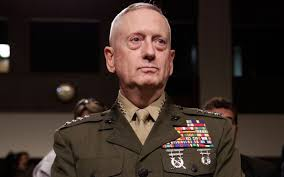
Marine Corps Gen.James Mattis


John Bolton 


Trump picked first Flynn  and now "Mad Dog" Mattis. Will he go for Bolton? If he does the US will have the toughest possible team against Iran. Quite a change from the appeasement of Iran under Obama.


The first four F-16s arrived in Israel in July of 1980.
On June 7, 1981 Israel attacked Osirak with 8 F-16s.
On Dec 12, 2016 the first two F-35 will arrive.

Will these F-35s see action against Iran or will the US use its F-22s and B2s?  I guess the next few months will be the most dangerous since Iran is realizing that the game is up. 

Krauthammer on Trump picking Mattis:


It’s good to have a military man. It’s also good to have a military man who is known as “Mad Dog.” Because let’s say you’re trying to send a message to obstreperous Iranians, who have been harassing our boats. I think you want to send a message that says something like, “If you don’t stop within 48 hours, I may have to turn the matter over to Mad Dog.” Translated afterwards into Persian. I think that can be quite useful. Nixon used the crazy factor to great effect. The Russians were always afraid they could push a button and he would go over the top, as when he went to nuclear alert during the Arab–Israeli War of ‘73. Good to have a mad dog on your side, especially one with his strategic knowledge and range and tactical, operational experience. That’s very rare and would serve extremely useful in the cabinet.

سگ دیوانه    Mad Dog in Farsi