Translate

Monday, September 4, 2017

N. KOREA AND IRAN


The situation playing out now with North Korea is a nightmare scenario of the dangers of nuclear proliferation.

It offers a partial preview of the sorts of dangers the world would face if Iran ever obtained nuclear weapon capability. And it vindicates the use of preemptive military strikes to keep nuclear weapons out of the hands of autocratic regimes, like the one that was launched – according to foreign news sources – by Israel a decade ago, on September 6, 2007.

On Sunday, North Korea, a country run by a madman, conducted its biggest nuclear test to date, setting off an explosion that Pyongyang said was caused by the detonation of an advanced hydrogen bomb. The tremor that resulted was said to be 10 times more powerful than the tremor picked up after the last test a year ago. Since 2006 North Korea has conducted six nuclear tests.

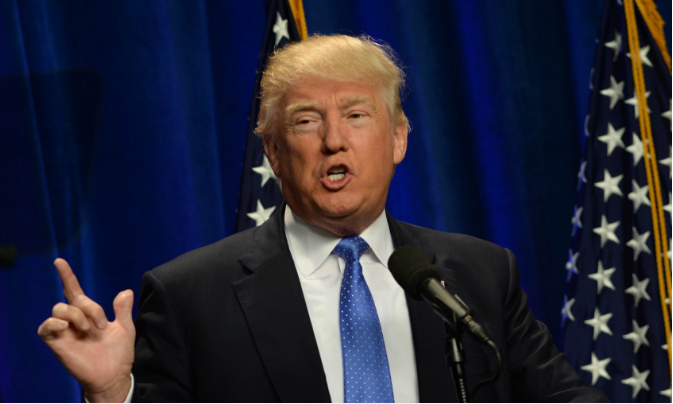
US President Donald Trump immediate reaction was registered, as is his custom, on his personal Twitter account.

“North Korea is a rogue nation which has become a great threat and embarrassment to China, which is trying to help but with little success.”

And, in a more strident message, Trump wrote: “South Korea is finding, as I have told them, that their talk of appeasement with North Korea will not work, they only understand one thing!” French President Emmanuel Macron urged the UN Security Council to react quickly and decisively.

“The international community must treat this new provocation with the utmost firmness, in order to bring North Korea to come back unconditionally to the path of dialogue and to proceed to the complete, verifiable and irreversible dismantling of its nuclear and ballistic program,” he said.

China, Russia and the International Atomic Energy Agency also weighed in.

But what can any of them do? No one wants to play chicken with Kim Jong Un and risk a nuclear Armageddon.

Iran’s mullahs, meanwhile, are carefully monitoring the developments. True, North Korea and Iran are radically different culturally. Iran is governed by religious fanatics who look to usher in a messianic age ruled by Shi’ites.

North Korea, in contrast, is run by a secular tyrant.

However, North Korea offers Iran a test case in the wonders of obtaining nuclear weapons. And it offers the world a sharp rebuke for past inaction and a foreboding warning for the future.

A small but aggressive nation with limited economic and military means has succeeded in leveraging its power to intimidate while remaining utterly immune to the influence of the international community – all accomplished by simply obtaining nuclear weapons.

Tehran has an opportunity to watch how the international community reacts – or rather fails to react – when Pyongyang fires a missile over Japan, as it did in August, or when it detonates a hydrogen bomb, as it did Sunday.

Trump might tweet, Macron might threaten, but the real danger of sparking a nuclear war will have a chilling effect on rational decision-making with regard to using military options to stop Pyongyang.

The Islamic Republic’s leadership did not need Sunday’s hydrogen bomb test to become convinced of the merits of obtaining an atomic bomb. As a nation of Shi’ites surrounded by a Sunni majority, Tehran’s motivation from the outset in obtaining nuclear weapons was first and foremost an insurance policy against being bullying around.

Libya’s lesson was not missed by the Iranians. The US’s toppling of Saddam Hussein’s regime under the pretext that he had weapons of mass destruction scared Muammar Gaddafi into disarming his country from nuclear weapons. Less than a decade later he was overthrown.

We do not want to think about what would have happened if Syria had succeeded, with North Korea’s help, in obtaining nuclear weapons instead of reportedly being stopped by a preemptive attack. President Bashar Assad had no qualms about using chemical weapons against his own people. We don’t know what he would have done had he obtained nuclear weapons.

There is a lesson to be learned from North Korea by the international community as well. Nothing came of the more than two years of negotiations with Pyongyang. No country stopped North Korea. The West ultimately accepted a North Korea with nuclear weapons capability. The same mistake must not be made again with Iran.


***
comment:  


The MAD doctrine is still holding with N .Korea, just barely. That will not be the case with Iran .  With Iran, MAD is dead. 

Sunday, September 3, 2017

Does MAD still work with N.Korea?


Things are looking pretty bad.  Does MAD still work with N.Korea?  I think yes, but only barely, if you judge by the comments from  defense secretary James Mattis  and John Bolton:


Good afternoon ladies and gentlemen.

We had a small-group national security meeting today with the president and the vice-president about the latest provocation n on the Korean peninsula.

We have many military options and the president wanted to be briefed on each one of them.

We made clear that we have the ability to defend ourselves and our allies, South Korea and Japan, from any attack and our commitments among the allies are iron-clad. Any threat to the United States or its territories including Guam, or our allies, will be met with a massive military response, a response both effective and overwhelming.

 Kim Jong-un should take heed of the United Nations security council’s unified voice, all members unanimously agreed on the threat North Korea poses, and they remain unanimous in their commitment to the denuclearization of the Korean peninsula.

Because we are not looking to the total annihilation of a country, namely North Korea, but as I said we have many options to do so.

Thank you very much, ladies and gentlemen.


Thursday, August 31, 2017

The Douglas Murray interview for the Dutch website GeenStijl


At the end of the interview Douglas Murray signs his book, to be delivered to the Prime Minister of the Netherlands, Mark Rutte. I seriously believe that this book may just make the difference and alter the course of European history. 

Friday, August 11, 2017

Even Naftali Bennett apparently does not understand the nature and magnitude of the Iranian threat. Scary!


“In this context, the deterrent that worked so well during the Cold War, namely M.A.D. (Mutual Assured Destruction) , would have no meaning.  At the End of Time, there will be general destruction  anyway.  What will matter is the final destination of the dead-- hell for the infidels, and the delights of heaven for the believers. For people with this mindset, M.A.D. is not a constraint; it is an inducement... “


Thursday, August 10, 2017

On Radical Islam, Trump Has Lost His Focus


There’s no ‘extreme vetting,’ no outreach to moderates, and too much coziness with Riyadh.


By  Ayaan Hirsi Ali

Candidate Donald Trump vowed to take a fresh approach to Islamic extremism. He ditched the politically correct language of the Obama administration by declaring that we were mired in an ideological conflict with radical Islam, which he likened to the totalitarian ideologies America had defeated in the 20th century.

Mr. Trump also promised, as part of his immigration policy, to put in place an “extreme vetting” system that screens for Islamic radicalism. He vowed to work with genuine Muslim reformers and concluded with the promise that one of his first acts as president would be “to establish a commission on radical Islam.”

Mr. Trump has had more than six months to make good on these pledges. He hasn’t gotten very far. The administration’s first move—a hastily drafted executive order limiting immigration from seven Muslim-majority countries—backfired when it was repeatedly blocked in court.

Worse, subsequent moves have tended to run counter to Mr. Trump’s campaign pledges. Aside from a new questionnaire for visa applicants, there has been no clarity regarding the promised “extreme vetting” of Muslim immigrants and visitors. The promise to work with and empower authentic Muslim reformers has gone nowhere. The status of the promised commission on radical Islam remains unclear.

Perhaps most discouragingly, the administration’s Middle Eastern strategy seems to involve cozying up to Saudi Arabia—for decades the principal source of funding for Islamic extremism around the world.

Some administration critics have blamed the loss of focus on Lt. Gen. H.R. McMaster, who became White House national security adviser in February. The most charitable formulation of this criticism is that military men who slogged their way through wars in Iraq and Afghanistan have an aversion to the argument that we face an ideological opponent, as opposed to a series of military problems.

But I put the responsibility on Mr. Trump. With regard to radical Islam, he simply seems to have lost interest.

Is all hope of a revamped policy on radical Islam lost? Not necessarily. Prominent members of Congress—among them Sens. Ron Johnson (R., Wis.) and Chuck Grassley (R., Iowa) and Reps. Ron DeSantis (R., Fla.) and Trent Franks (R., Ariz.)—understand that Islamism must be confronted with ideas as well as arms.

And this need not be a partisan issue. In the early years after 9/11, Sens. Jon Kyl (R., Ariz.), Dianne Feinstein (D., Calif.) and Chuck Schumer (D., N.Y.) worked together to analyze the threat of Islamist ideology. Even President Obama’s former representative to Muslim communities, Farah Pandith, who visited 80 countries between 2009 and 2014, wrote in 2015: “In each place I visited, the Wahhabi influence was an insidious presence . . . Funding all this was Saudi money, which paid for things like the textbooks, mosques, TV stations and the training of Imams.” In 2016, addressing the Council on Foreign Relations, Sen. Chris Murphy (D., Conn.) sounded the alarm over Islamist indoctrination in Pakistan, noting that thousands of schools funded with Saudi money “teach a version of Islam that leads . . . into an . . . anti-Western militancy.”

We have already seen one unexpected outbreak of bipartisanship in Washington this summer, over tightening sanctions on Russia in retaliation for President Vladimir Putin’s many aggressions.

I propose that the next item of cross-party business should be for Congress to convene hearings on the ideological threat of radical Islam. “Who wants America on offense, with a coherent and intelligible strategy?” Newt Gingrich asked in 2015, when he called for such hearings. Then as now, if the executive branch isn’t willing—if the president has forgotten his campaign commitments—lawmakers can and should step up to the plate.

Ms. Hirsi Ali is a research fellow at the Hoover Institution, Stanford, and founder of the AHA Foundation.

Sunday, August 6, 2017

A conditio sine qua non to understanding the Middle East


Letters to the Editor,   August 7, 2017


Melanie Phillips, in “An open letter to Jared Kushner” (As I See It, August 4), is spot on. But in order to understand why Ms. Phillips is right, Mr. Kushner needs to read these three books first: Ayaan Hirsi Ali’s Heretic: Why Islam Needs a Reformation Now, Ibn Warraq’s The Islam in Islamic Terrorism: The Importance of Beliefs, Ideas and Ideology, and Douglas Murray’s The Strange Death of Europe: Immigration, Identity, Islam. (Murray’s book may well be the one that changes the course of European history.) Mr. Kushner and his father-in-law, US President Donald Trump, had better read, learn and not repeat the mistakes Europe has made.

MLADEN ANDRIJASEVIC
Beersheba 


Friday, August 4, 2017

The facts that shock: The economy of North Korea is 1/50th the size of South Korea’s economy


Was reading The Economist,  and got a shock when I read this:

“IT IS odd that North Korea causes so much trouble. It is not exactly a superpower. Its economy is only a fiftieth as big as that of its democratic capitalist cousin, South Korea.”

 A fiftieth?   So I went to the CIA world factbook, and indeed:

                                                                S Korea                                 N.Korea
                                                            
 GDP (purchasing power parity):  $1.934 trillion (2016 est.)           $40 billion (2015 est.)
 Population                                    50,924,172 (July 2016 est.)        25,115,311
 GDP - per capita (PPP):               $37,900 (2016 est.)                   $1,700 (2015 est.)

The above facts may be obvious to economists and journalists who closely follow the conflict.  To me, it came as a surprise. The last time I reacted similarly was when I realized that the economy of Belgium is greater than that of all Africa put together, excluding South Africa.